
Shopping for a Home Backup Generator? Read This Before You Buy.


If you’ve lived on the Peninsula or the Southside long enough, you know the feeling.
A storm rolls up the coast, the lights flicker once, then twice, and then the house goes quiet. The fridge stops humming.
The AC stops. Your phone is at 40% and suddenly that number matters a lot more than it did an hour ago.
That’s usually the moment people start searching for a home backup generator. It’s a smart instinct. Before you sign anything, though, there’s a newer option worth five minutes of your time, and most homeowners don’t know it exists yet.
The Home Backup Generator Has Earned Its Reputation

Let’s give credit where it’s due. Generators have kept American homes running through storms for decades, and the big names are big for a reason.
Generac is the brand most people picture when they think “whole-home standby.” Kohler and Cummins build serious, well-engineered standby units. Briggs & Stratton has been in the game forever.
On the portable side, Champion, Westinghouse, and Honda are the names you’ll see stacked at the hardware store before every hurricane season.
These are good machines. A properly sized and installed home backup generator running on natural gas can keep a house going through a long outage. Nobody here is going to tell you otherwise.
What the brochures tend to leave out is what owning one looks like day to day.
What Living With a Generator Actually Looks Like

A standby generator is an engine. Like any engine, it needs fuel, oil changes, filters, and regular maintenance. Most of them run a scheduled self-test, often weekly, so you and your neighbors will hear it start up whether the power is out or not.
When it does run, it’s loud and it produces exhaust. If you have propane instead of natural gas, you’re watching tank levels and scheduling deliveries. With a portable unit, you’re out in the rain running extension cords and keeping gas cans on hand, and you have to place the generator carefully, well away from doors and windows, because carbon monoxide is a real danger.
The bigger issue is that a generator only earns its keep during an outage. It sits in the side yard for months and costs you maintenance money, and then it gets a few days of work a year if you’re lucky.
That was simply the trade-off for a long time. It doesn’t have to be anymore.
What If Your Backup Power Worked Every Day?

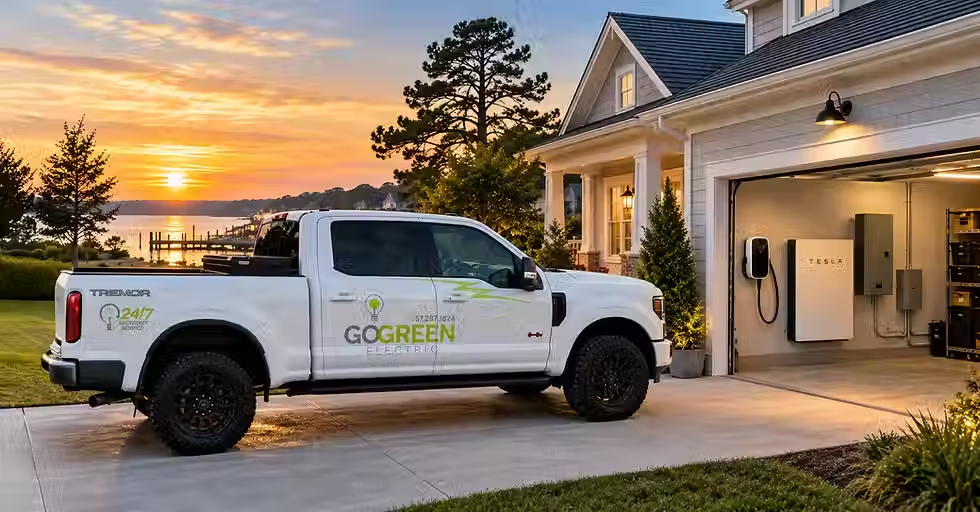
Tesla Powerwall 3 takes a completely different approach to the same problem. It’s a home battery: no engine, no fuel, no oil, no exhaust. It mounts on your wall and it’s silent.
When the grid goes down, Powerwall picks up the load automatically. There’s no manual switch and no waiting for an engine to turn over. With 13.5 kWh of usable storage and 11.5 kW of continuous power, a single Powerwall 3 can run major appliances like your HVAC system during an outage, and you can add units for larger homes.
The difference people notice most is that a Powerwall works on ordinary days too. Paired with solar, it stores what your panels make during the day and powers your home with it at night.
Its Storm Watch feature watches the forecast and charges the battery to full before severe weather arrives, without you lifting a finger.
A generator is insurance. A Powerwall is part of how your home runs every day.
And Then Tesla Changed the Game Again

This is the part most generator shoppers haven’t heard about yet.
Tesla just rolled out Powershare Home Backup for the Model 3 and Model Y. Every new Model 3 and Model Y ordered in the U.S. on or after October 1, 2026 can send power from its battery into your home during an outage, working alongside your Powerwall 3.
By Tesla’s estimate, a Model 3 or Model Y charged to 90% can add more than two days of backup for a home using about 30 kWh a day. That’s the car already sitting in your driveway, now working as part of your home’s backup system.
There’s one catch, and it matters. Powershare Home Backup requires a Powerwall 3. No Powerwall, no home backup from the car.
A generator can’t plug into that future. A Powerwall is the doorway to it. (We broke the full announcement down in The Next Big Thing in Home Energy Just Got Bigger — And Tesla Owners in Hampton Roads Are First in Line.)
So, Generator or Powerwall?
Honest answer: it depends on your home, and anyone who tells you otherwise without looking at your panel is guessing.
For some homes a home backup generator is still the right call. If you need to run a very large home for many days straight with no sun and no EV in the picture, a natural gas generator may fit better.
We’ll tell you that if it’s true.
For a growing number of homeowners, though, especially anyone who already has solar, already drives a Tesla, or is planning to, the math and the lifestyle both point toward Powerwall. These folks want backup power that’s quiet, automatic, and useful all year, not just during the one week a year when it storms.
That’s the conversation Judson has every week. Plenty of people call Go Green Electric asking about generators. By the end of the call, many of them realize the thing they actually want is to stop worrying about the power going out, and that the best way to get there wasn’t the machine they called about.
Start With a Free Virtual Estimate
You don’t have to figure this out alone, and you don’t need anyone at your door to get started.
Go Green Electric is a Tesla Certified Powerwall Installer serving the Virginia Peninsula and Hampton Roads. Every Powerwall project starts with a free virtual estimate.
Judson looks at your electrical panel, your energy use, and your goals live on the call, then gives you a straight answer about whether Powerwall, a generator, or a combination makes sense for your home.
Book Your Free Virtual Estimate or call us at 757-287-1824.
Storm season will come back around whether or not you’re ready. The question is whether your backup plan is sitting in the yard waiting for the next storm, or working for you every day.

Comments